
Gumtree
Gumtree needed to fix a serious communications problem without solving it by sending fewer useful notifications.
60.2% of iOS users had push notifications disabled.
Gumtree had received ACMA warnings after people who had unsubscribed or deleted their accounts continued receiving communications. At the same time, notifications were important for bringing buyers back to the marketplace, while users were frustrated enough by irrelevant or incorrect notifications that many were turning them off completely.
Fixing an all-or-nothing system
A temporary blanket opt-in rule reduced the compliance risk, but created another problem. If someone opted out of one preference, Gumtree could no longer send them other communications they may still have wanted.
An internal one-week snapshot suggested the blanket rule was excluding 40.21% of campaign messages, although other workflow and data issues also contributed.
We needed to fix the underlying preference system while giving people a reason to keep useful notifications switched on.
Finding the right level of control
I ran an ideation workshop with the Buyer team and Marketing to get the different needs on the table. We explored clearer communication types, channel preferences, notification frequency and more contextual prompts.
I was particularly interested in frequency. I thought giving people the choice of immediate, daily or weekly notifications might make them less likely to switch them off altogether.
Marketing was hesitant to give up that much control over when Gumtree could send promotions and other communications. Rather than argue for it based on opinion, I included frequency controls in the prototypes and tested them.
What we learned
People cared less about choosing a delivery schedule than I expected. What mattered more was whether the notification felt relevant.
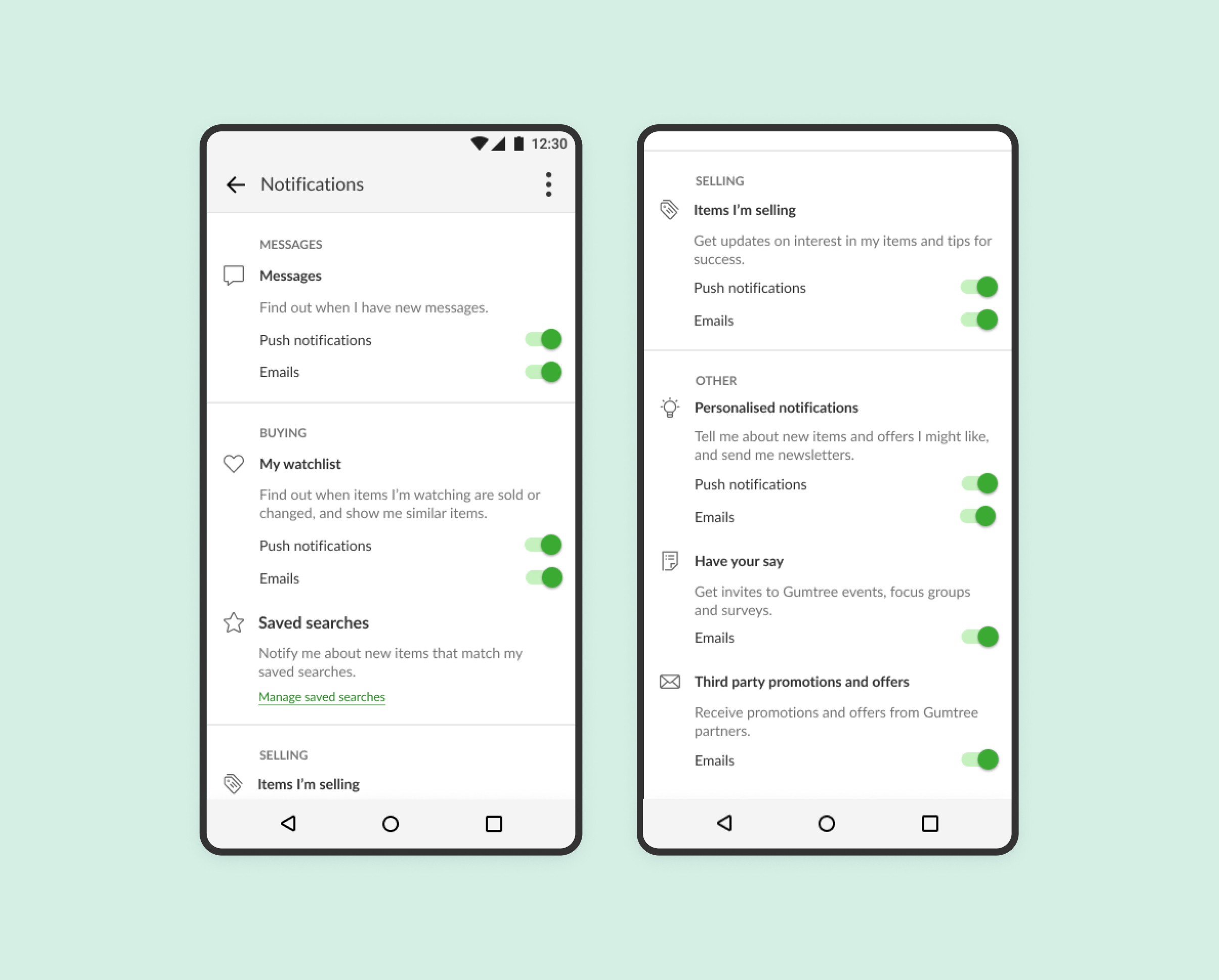
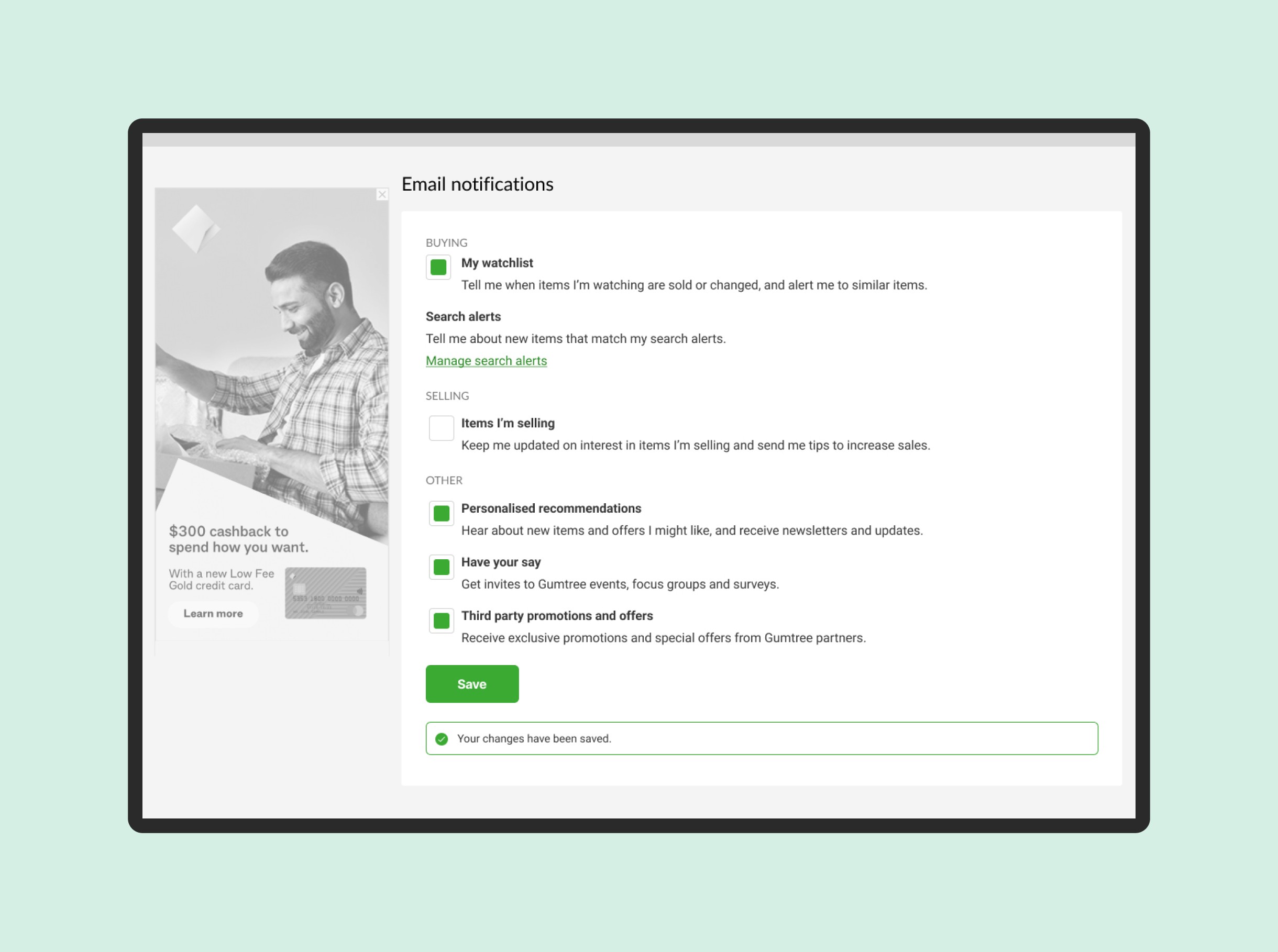
Testing also helped us decide how granular the preference centre should be. People often switched off communications they considered irrelevant and weren’t always sure which settings controlled email versus push.
We tested two ways of organising those controls. 3/5 participants preferred seeing the options together rather than opening each category individually.
“You can see the different kind of options available to you without having to click into each individual section.”
Language mattered too. 2/5 participants looked specifically for “newsletter” and didn’t connect it with “personalised recommendations and updates”.
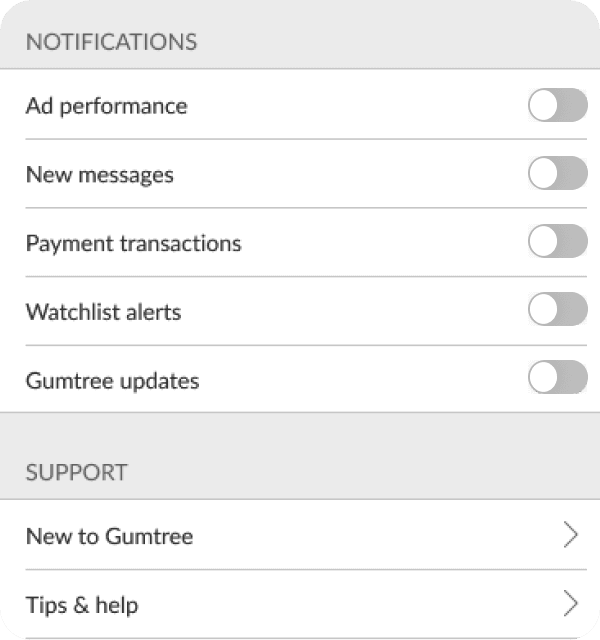
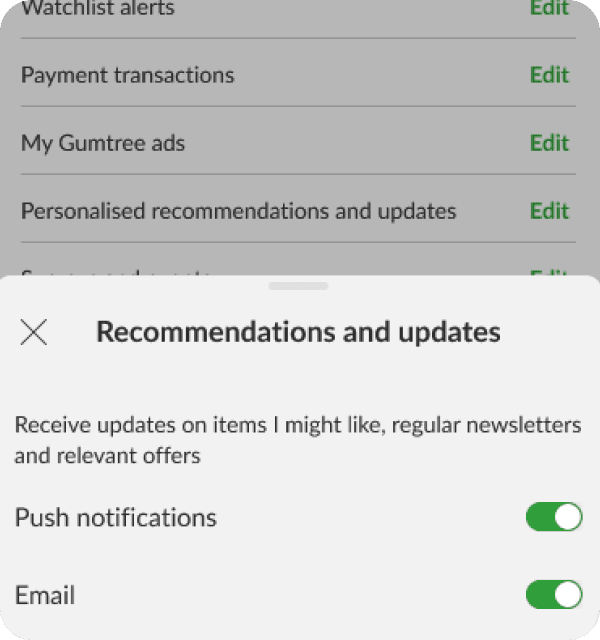
We took the more visible, consolidated approach forward. More granular preferences gave people a way to keep the notifications they valued without having to accept everything else.
Asking at the right moment
The other important finding was that people were more receptive to notification prompts when there was an obvious reason for receiving them.
That shifted my attention from how often we sent notifications to when we asked people to enable them.
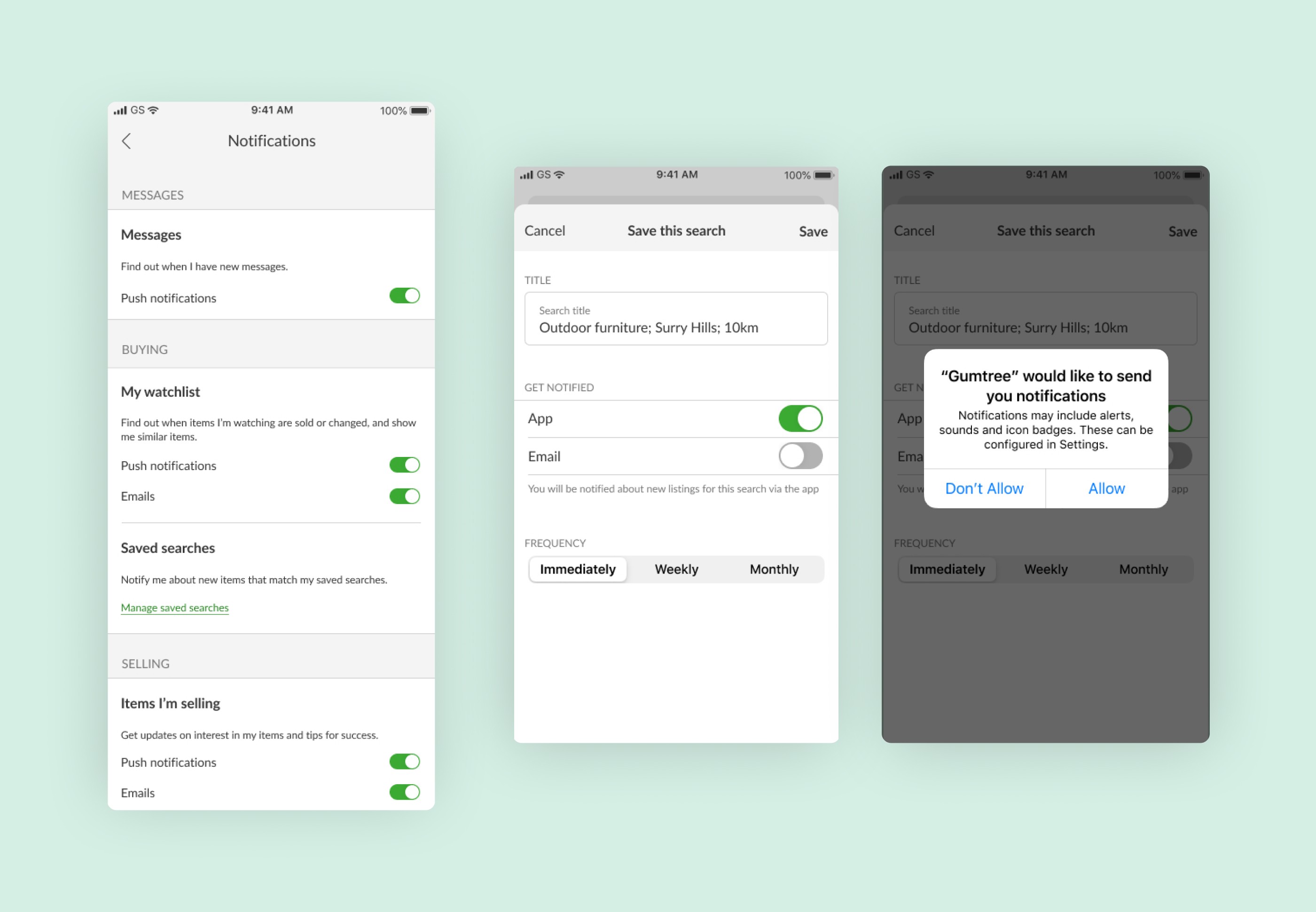
I pushed for contextual pre-permission prompts tied to useful marketplace actions. The clearest example was after sending a message to a seller: turn on notifications so you know when they reply.
The same idea applied after saving a search or adding something to the Watchlist.
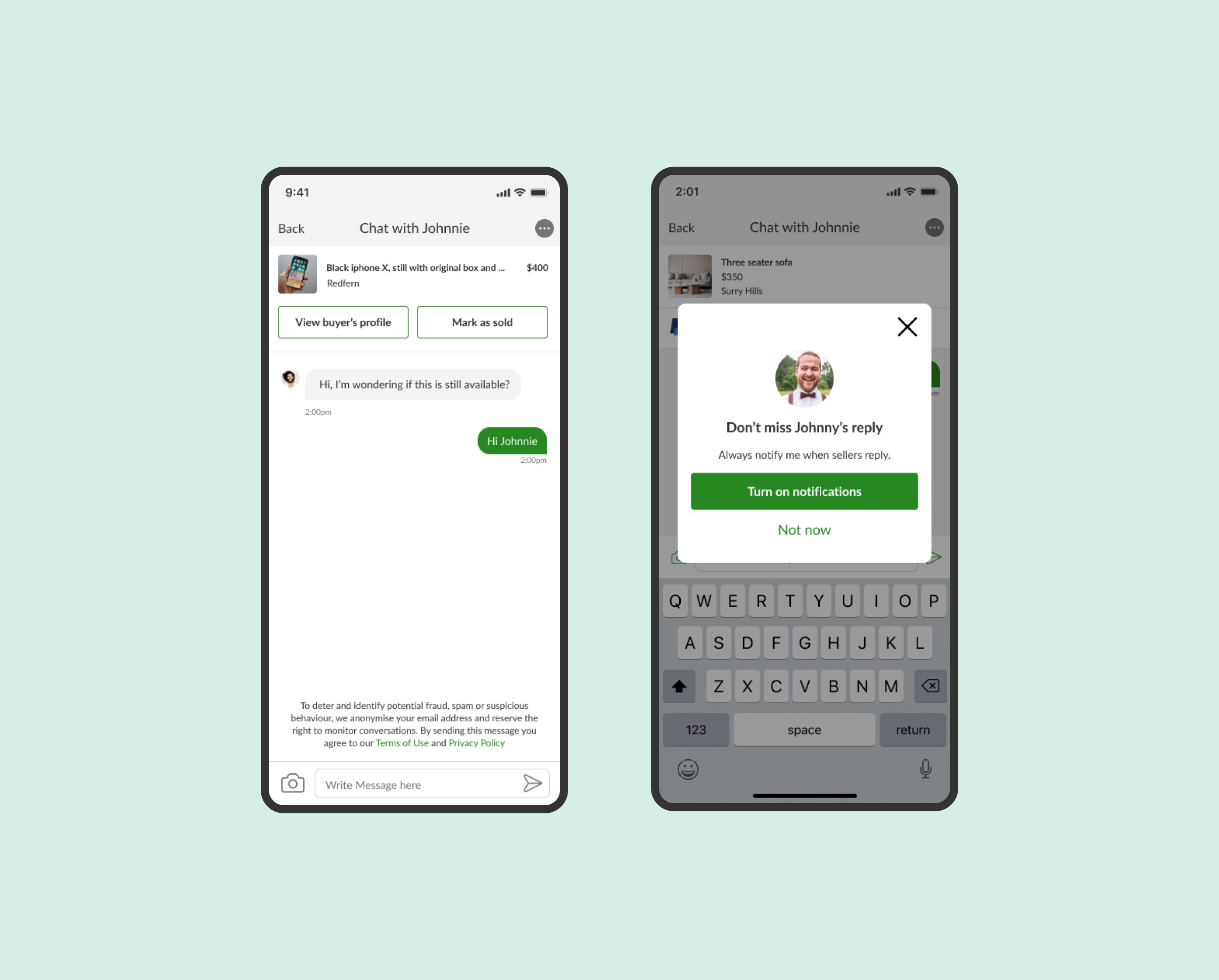
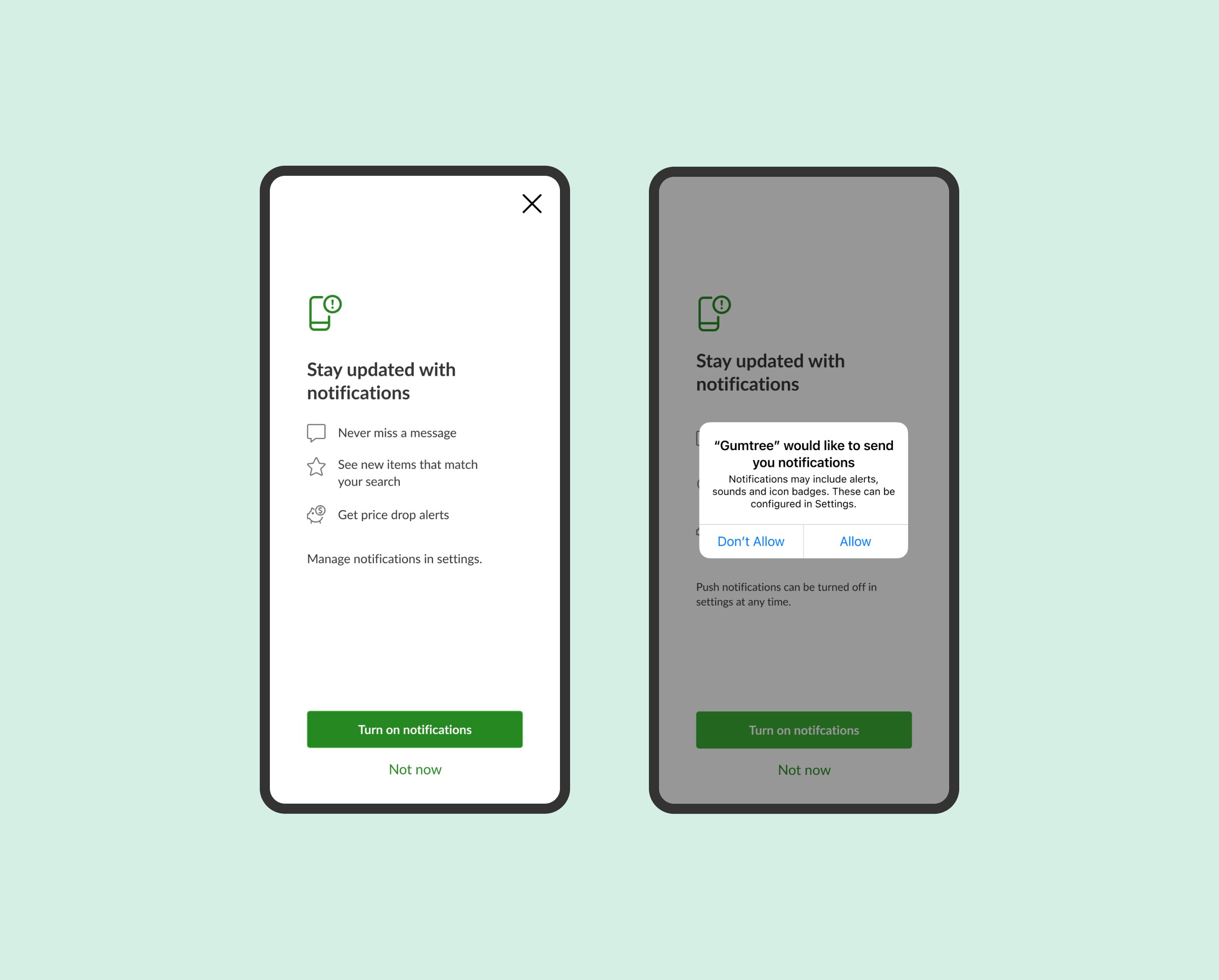
The prompts also had to respect the existing iOS permission state. If someone had already denied notifications, we directed them to Settings rather than triggering a permission request that could no longer appear. We also limited pre-permission prompts to one per session.
Impact
Three months after launch:
- 18% increase in Android push notification opt-ins
- 4% increase in iOS push notification opt-ins