
Koala
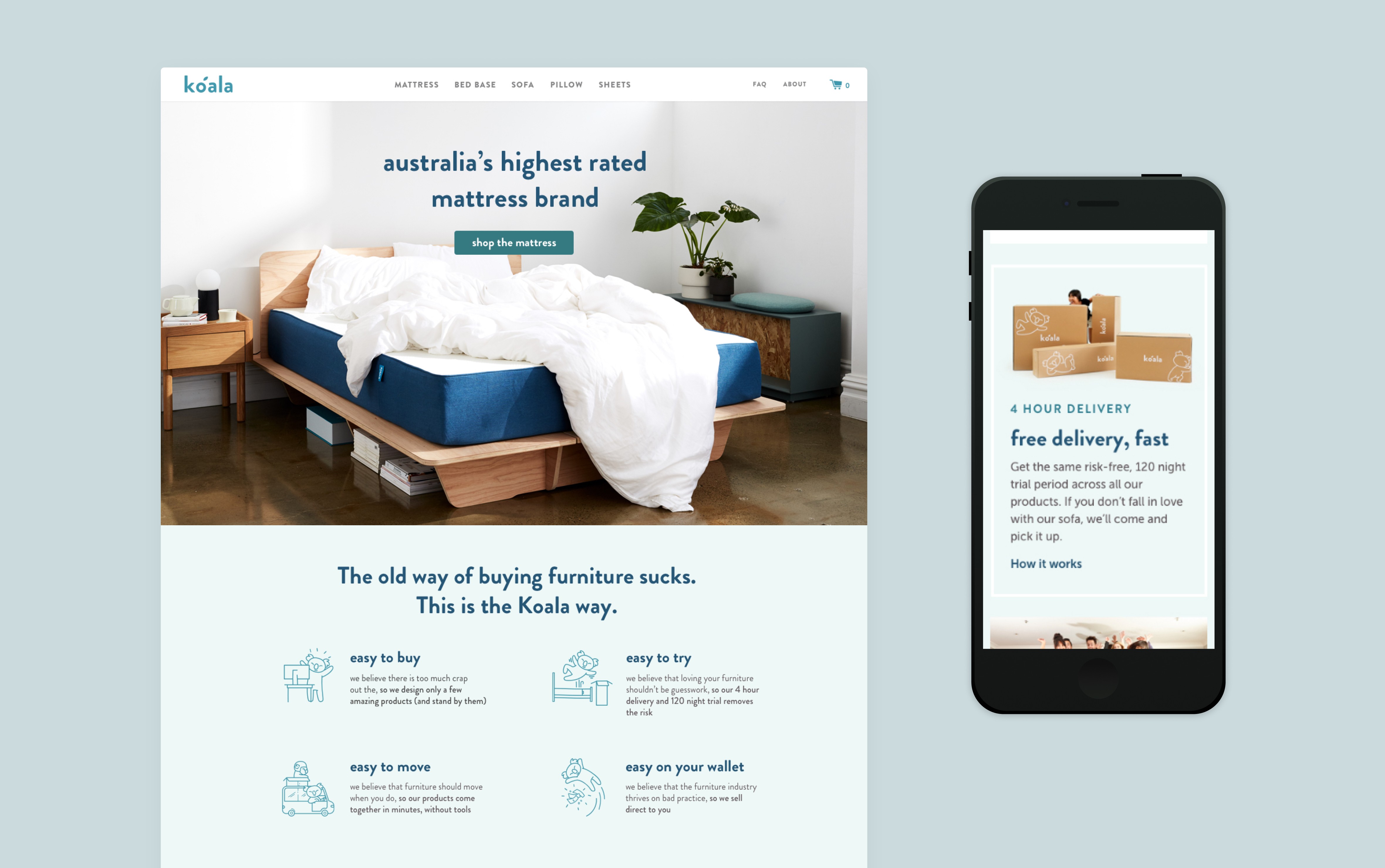
When I joined Koala in 2017, its online experience had been built around a deliberately simple range: a mattress and a pillow.
As Koala expanded into sofas, bed bases and other furniture, the website needed to handle more products, more information and more customer questions. I worked across product pages and self-service support, using recurring customer questions to decide what to improve.
Learning from customer support
As the product range grew, so did the number of questions customers needed answered before buying. I spent time with the Customer Service team, listened to calls and reviewed Zendesk conversations to see what people were repeatedly asking about.
I combined that with user interviews, usability testing and Hotjar data. A recurring problem was that useful information often existed on the site, but customers either couldn’t find it or didn’t see it before reaching out for help.
We used those recurring questions to decide what to fix first.
Putting important information where people needed it
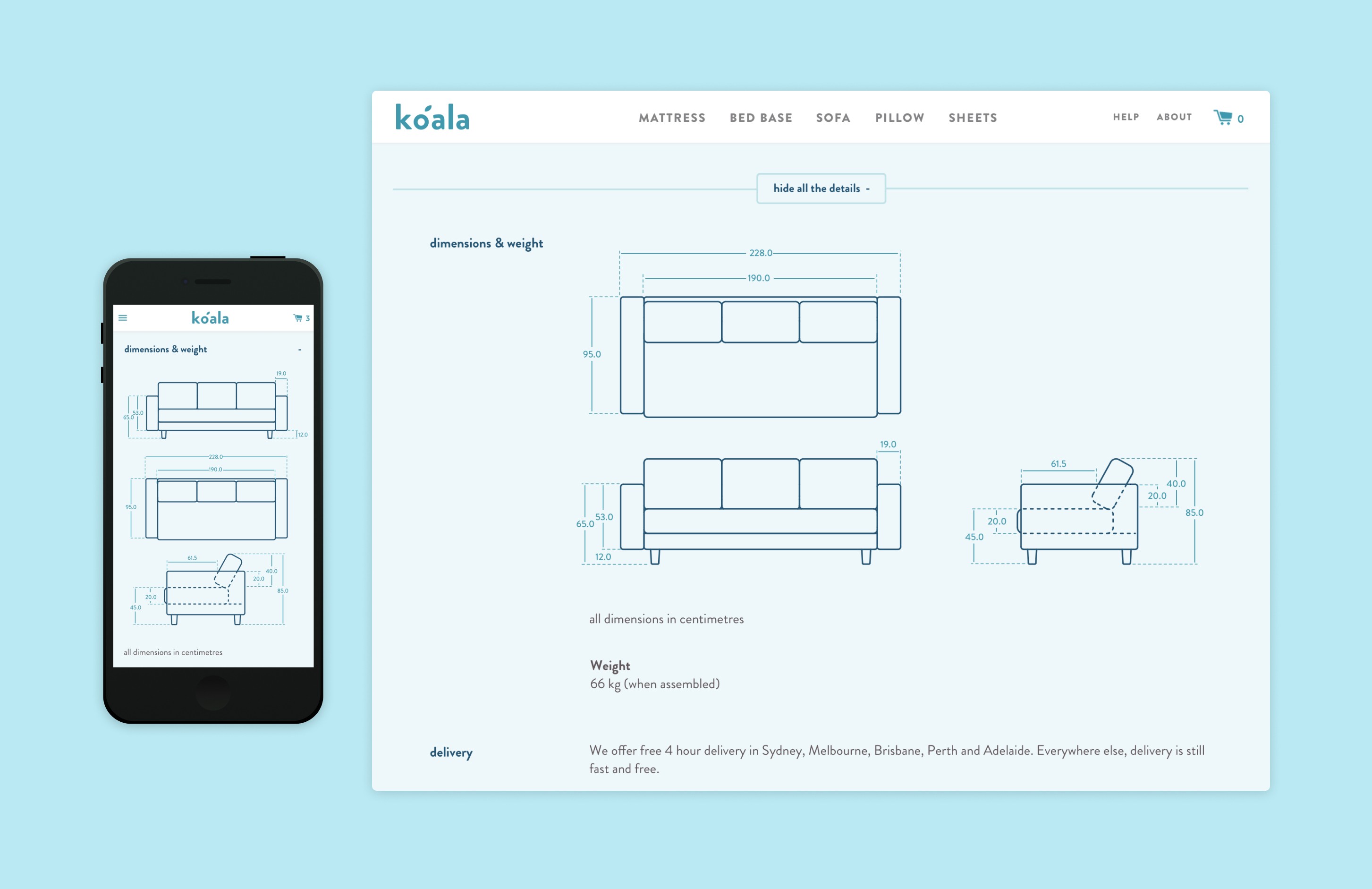
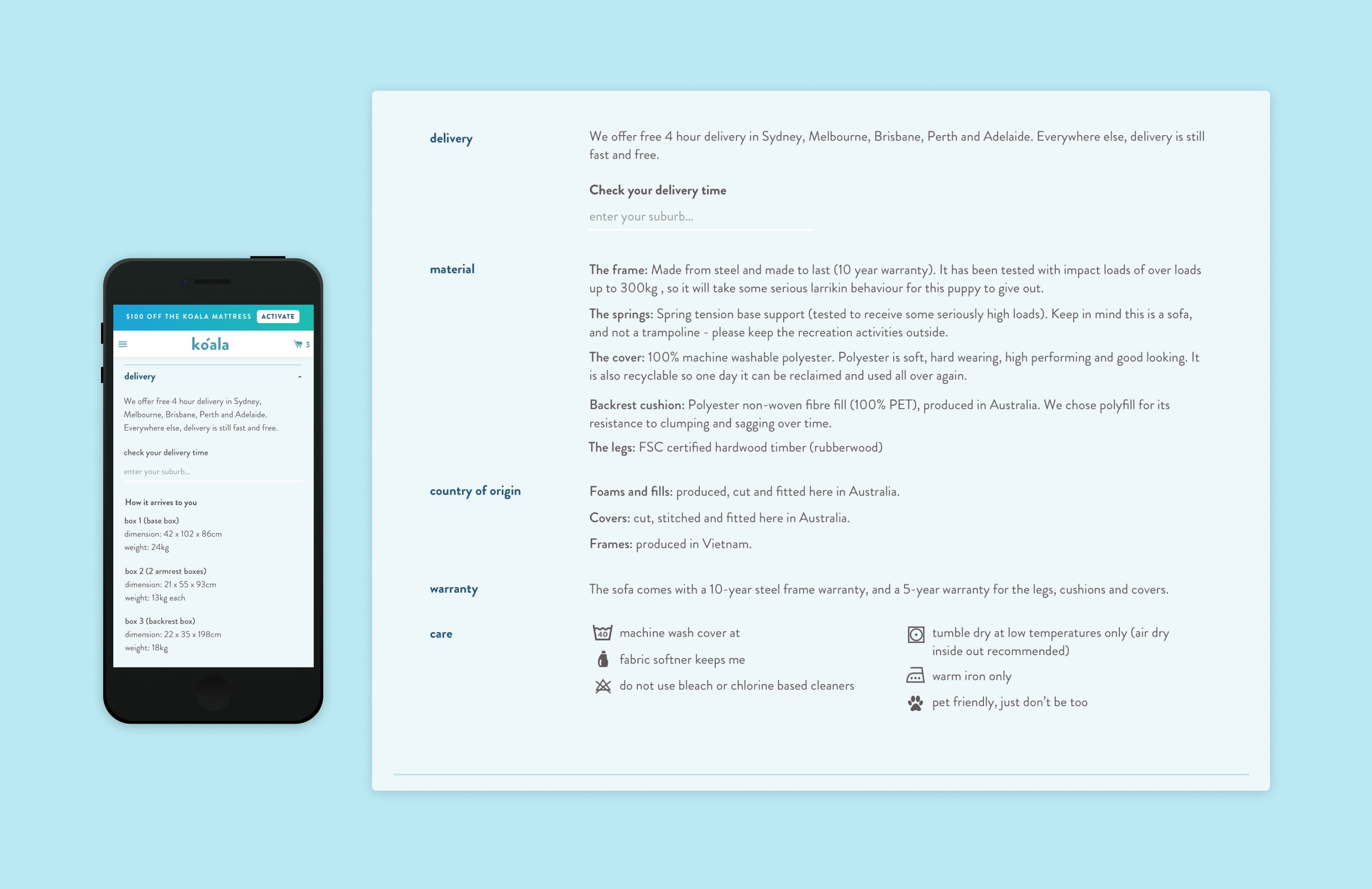
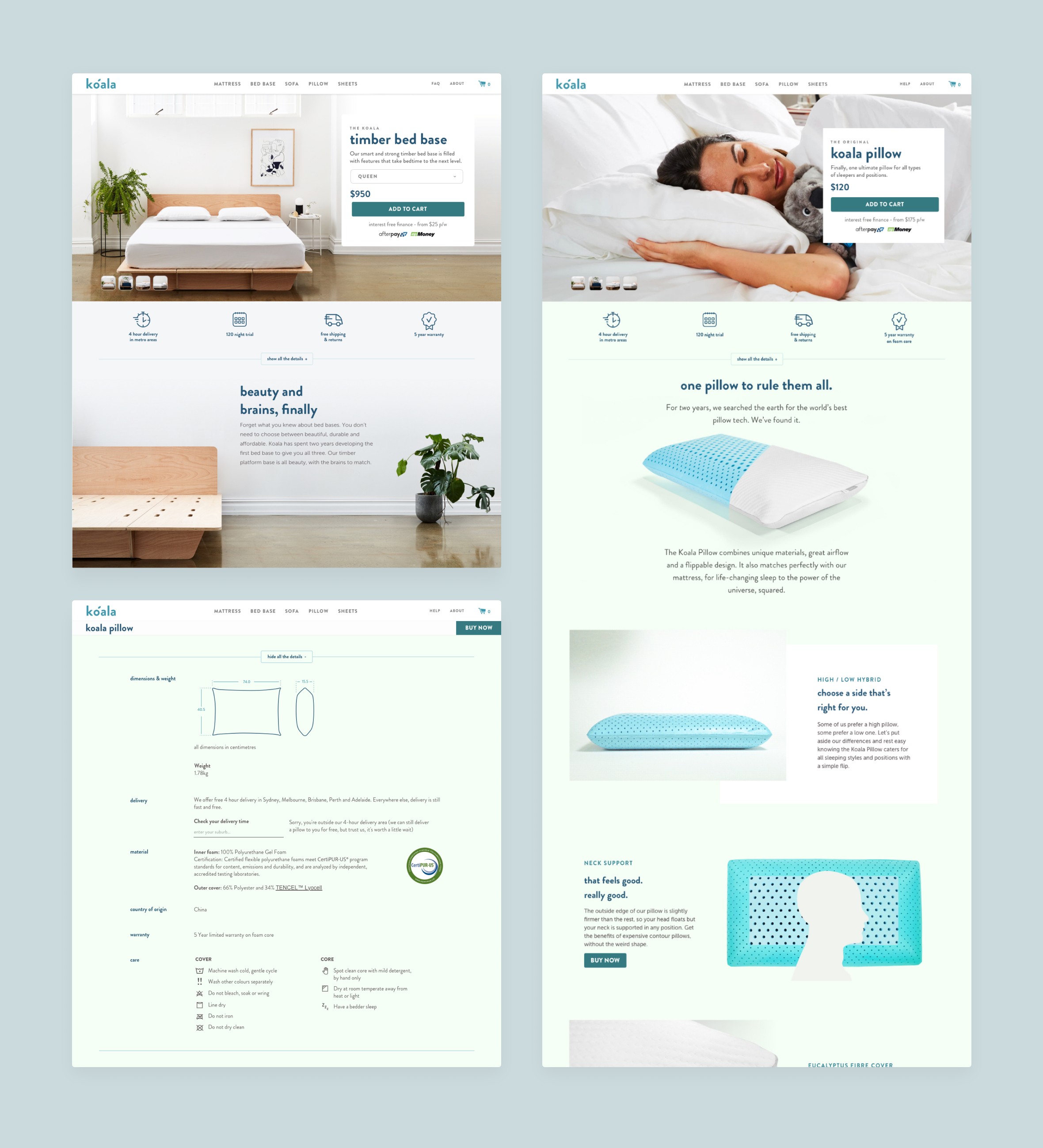
Important product details were often sitting further down the page than customers reached. I moved the information people needed to make a decision higher in the experience and reworked the hierarchy across mobile and desktop.
Making the four-hour delivery promise clearer
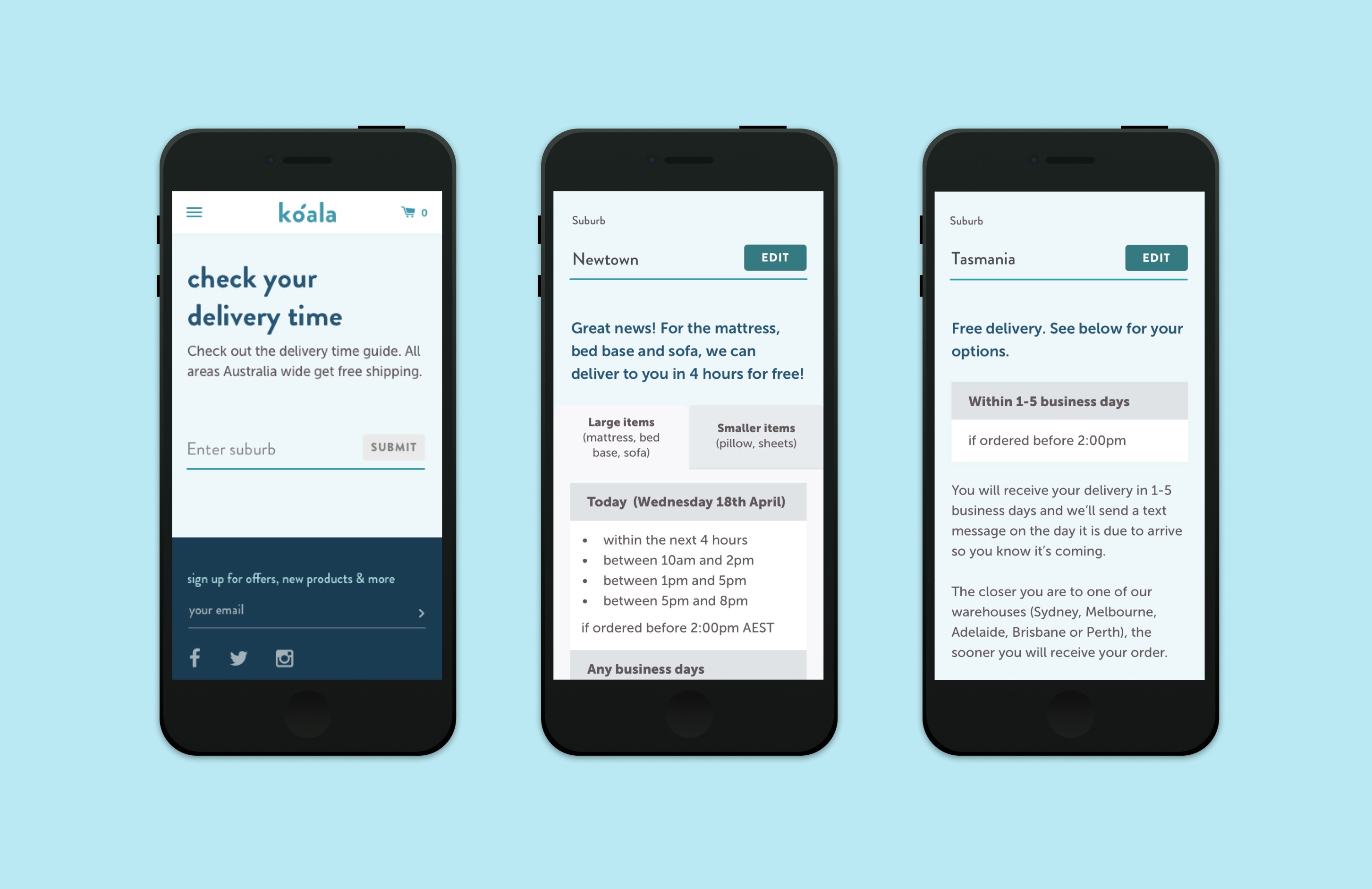
Delivery was a common source of confusion. Koala advertised four-hour delivery, but terms like “Metro” and “Rural” left customers unsure whether that promise applied to them.
Rather than asking people to interpret the delivery rules themselves, I brought a postcode checker directly into the product page. Customers could enter their postcode and get an answer for their location before buying.
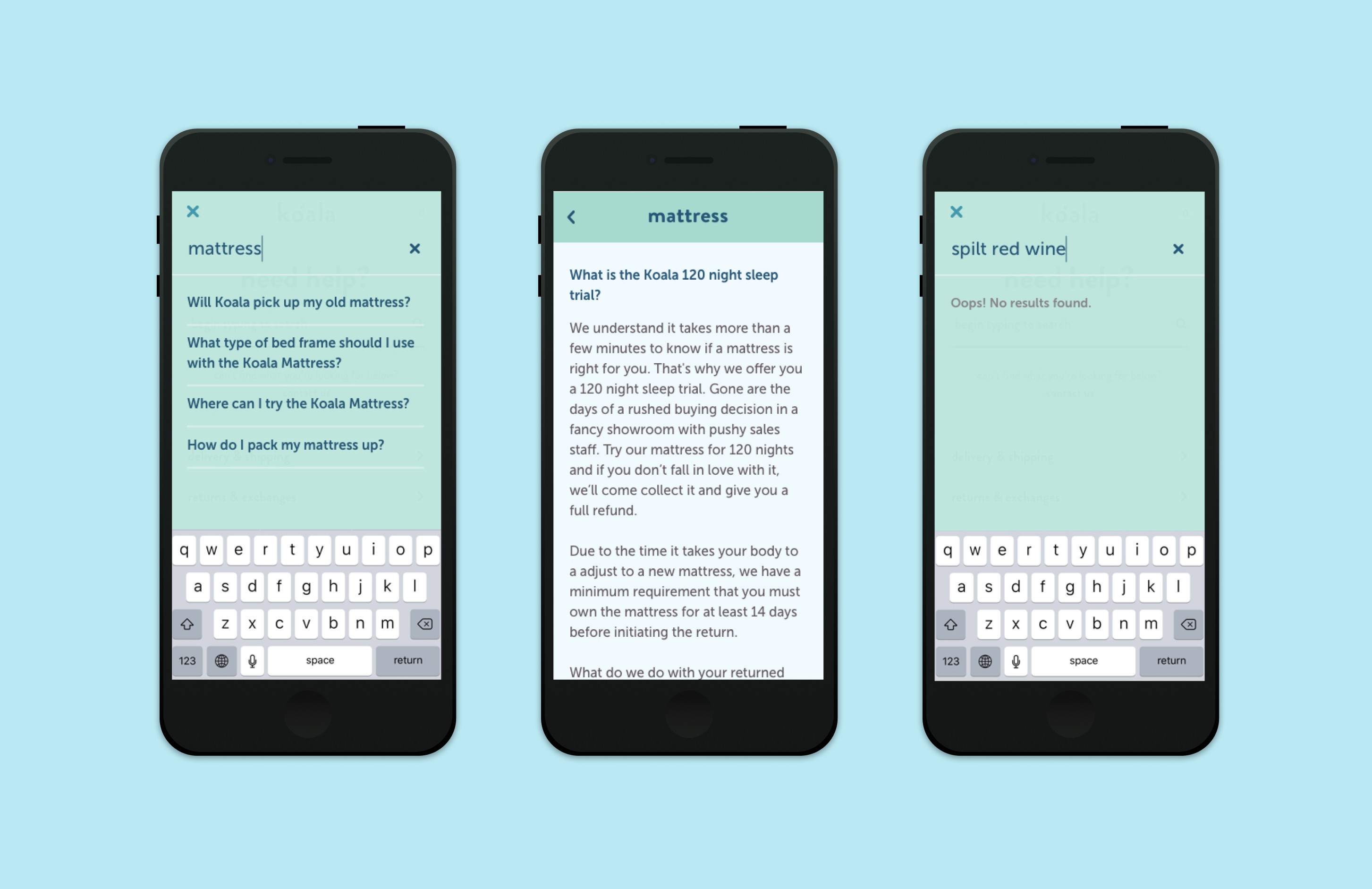
Making common questions self-service
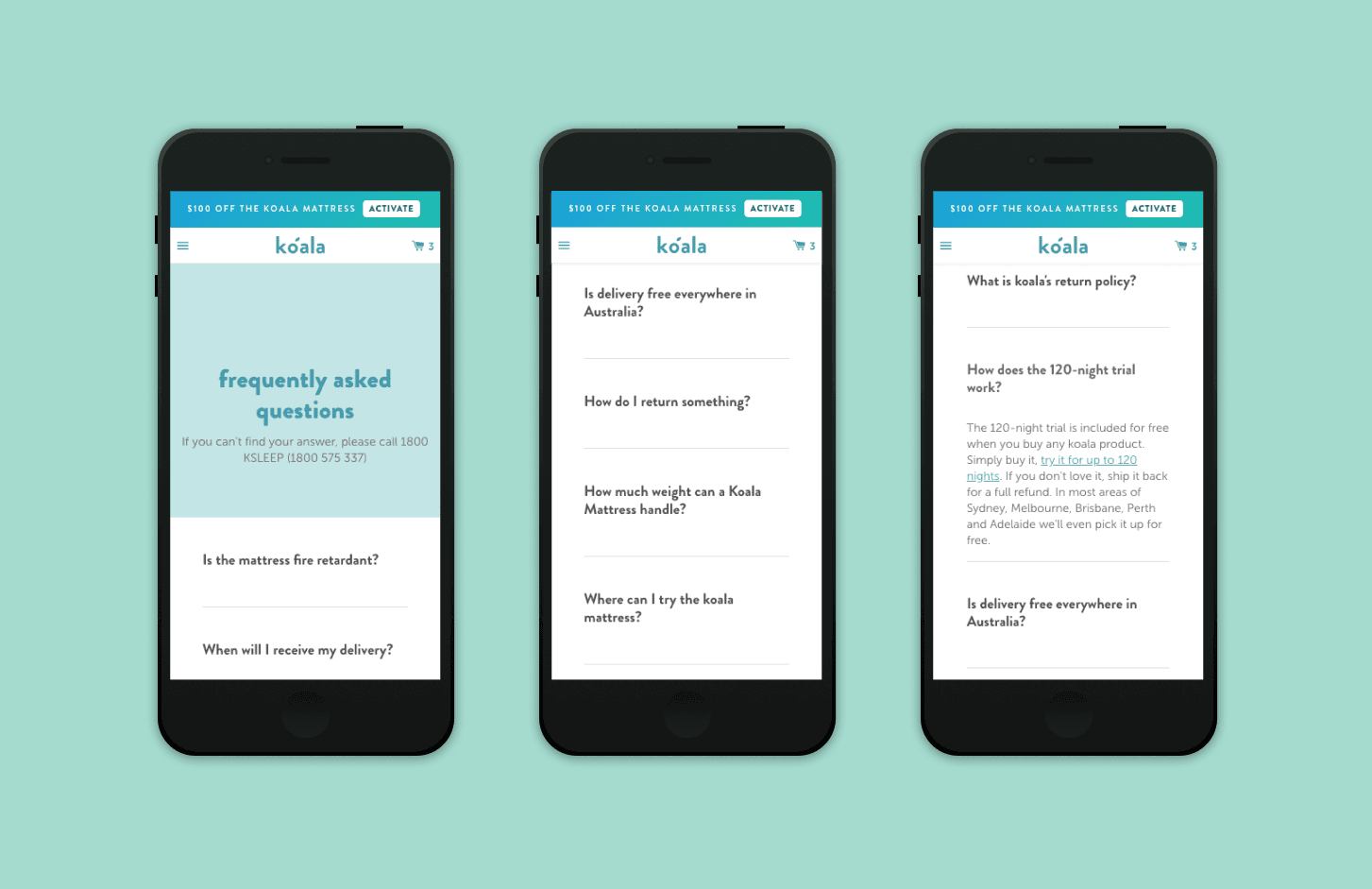
Koala’s FAQ had grown into a long, poorly organised collection of questions just as Customer Service was dealing with more enquiries.
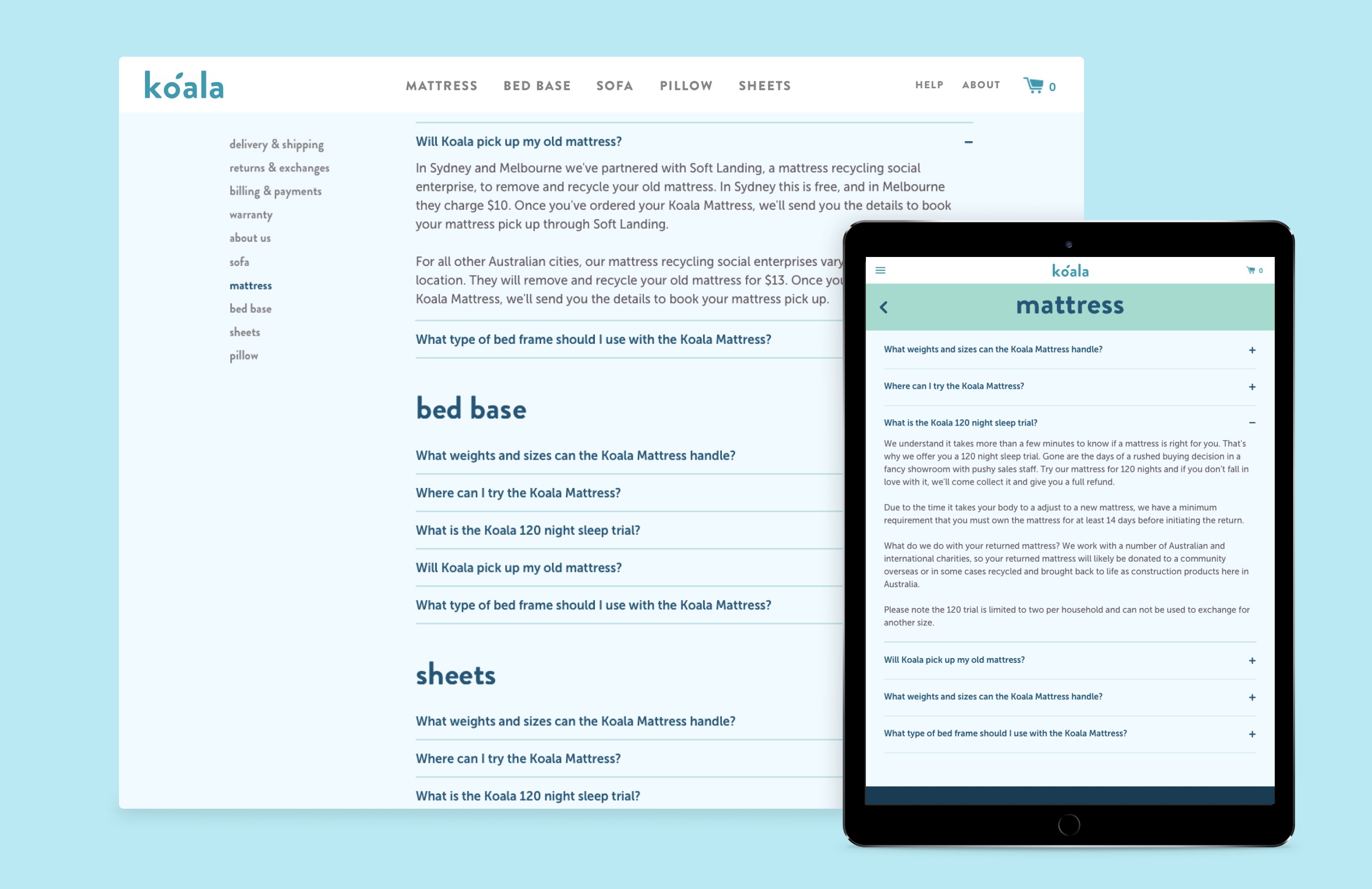
I reorganised the help content around the questions customers asked most often, with clearer categories and navigation between topics.
Giving Customer Service more control
There was another problem behind the interface: Customer Service knew when an answer needed changing, but updating the website depended on other teams.
I worked with the tech lead on a spreadsheet-based setup that the CS team could edit themselves, with those updates feeding into the help experience. Customer Service could update answers without waiting for a website release.
Building for a growing product range
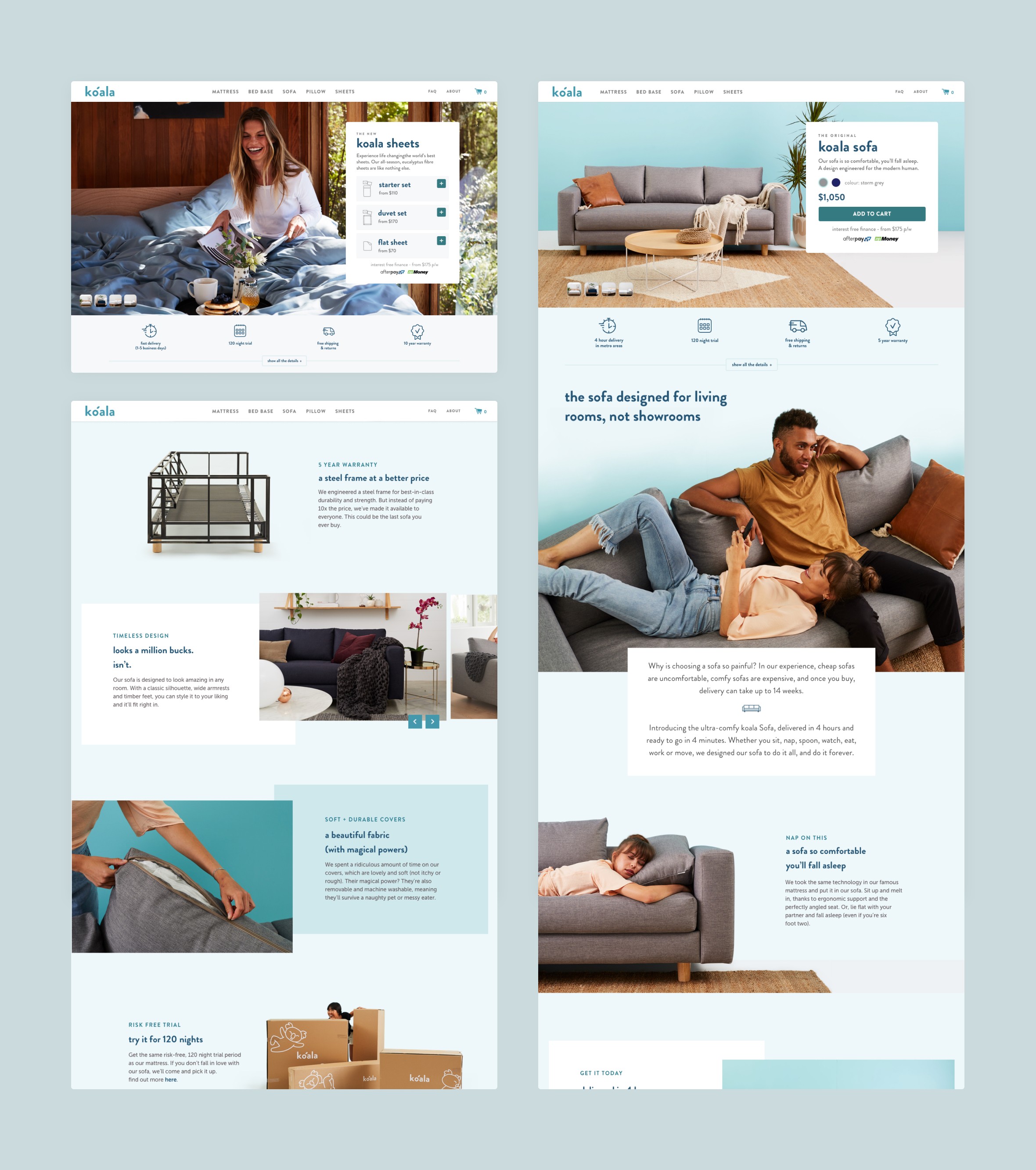
As the range grew, designing every product page from scratch stopped making sense.
I designed a modular product-page system that could accommodate different combinations of photography, product information and content across devices. This gave design and development reusable patterns for launching new products.
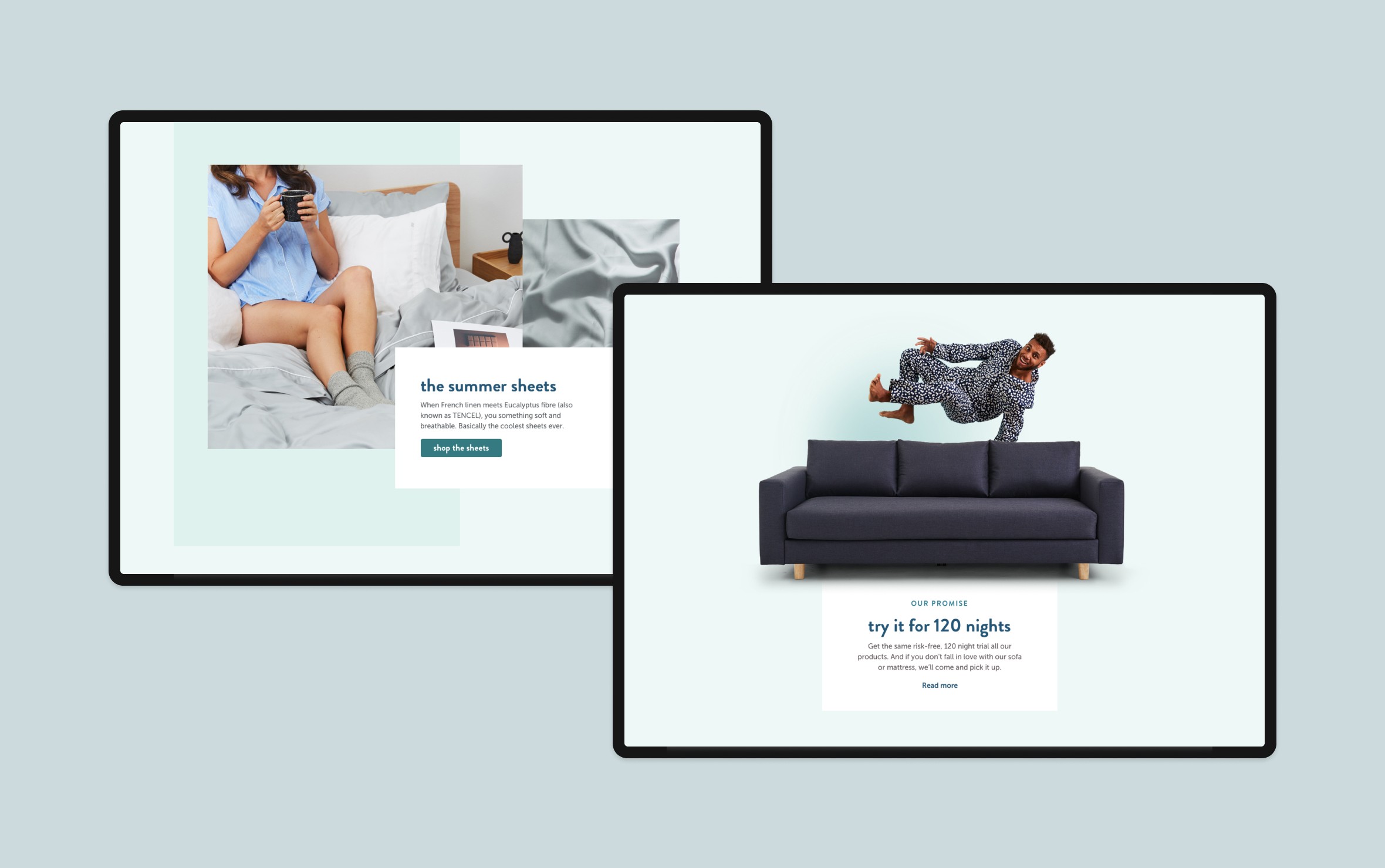
Alongside the wider design team, I also contributed to Koala’s brand refresh and the early design-system work that brought more consistency across the website.
Impact
The new product pages and help centre gave customers more ways to answer common questions without contacting Customer Service. We couldn’t reliably attribute changes in support volume to the redesign because sales and promotions also affected enquiries, returns and support demand.
The work also made the site easier to maintain as Koala expanded. Customer Service could keep help content up to date, while the modular product-page system gave design and development reusable patterns for launching new products.